
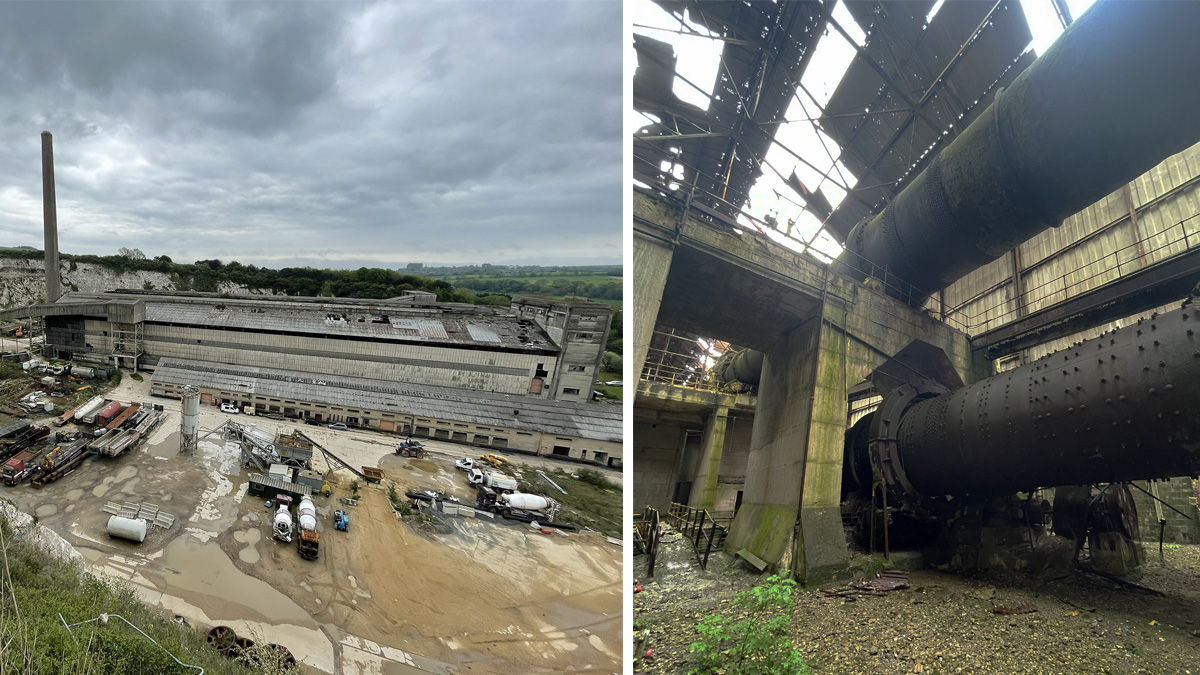
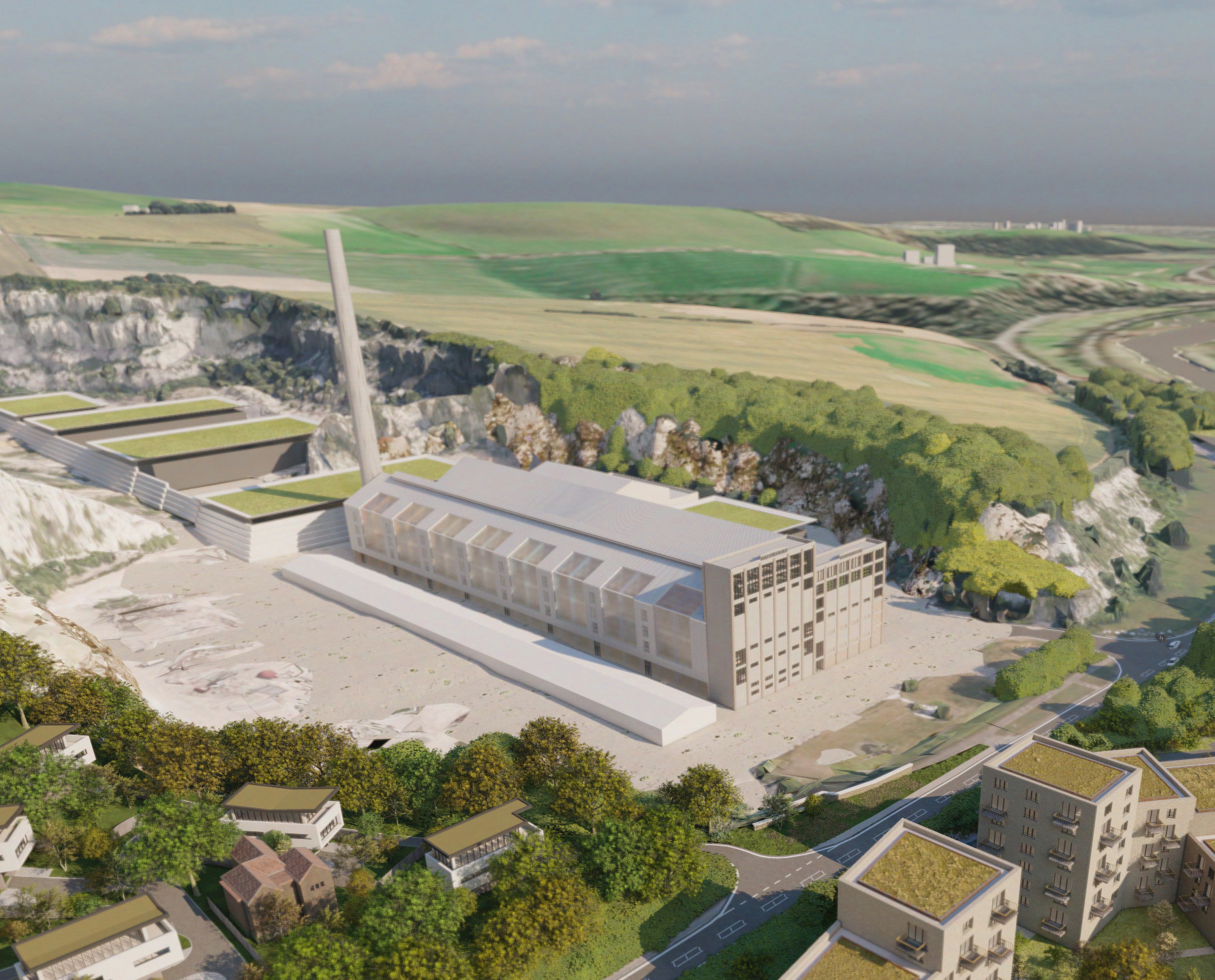
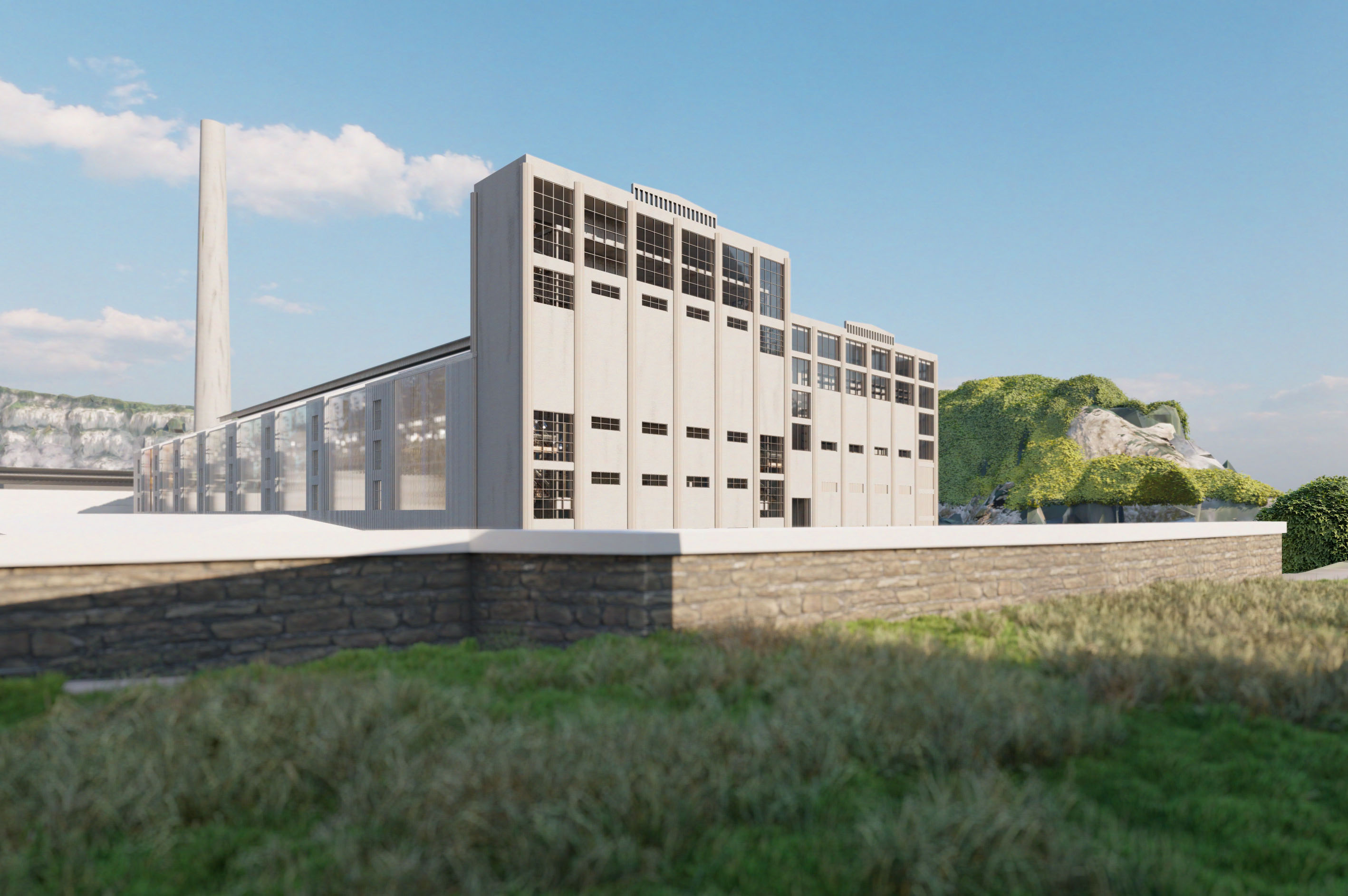
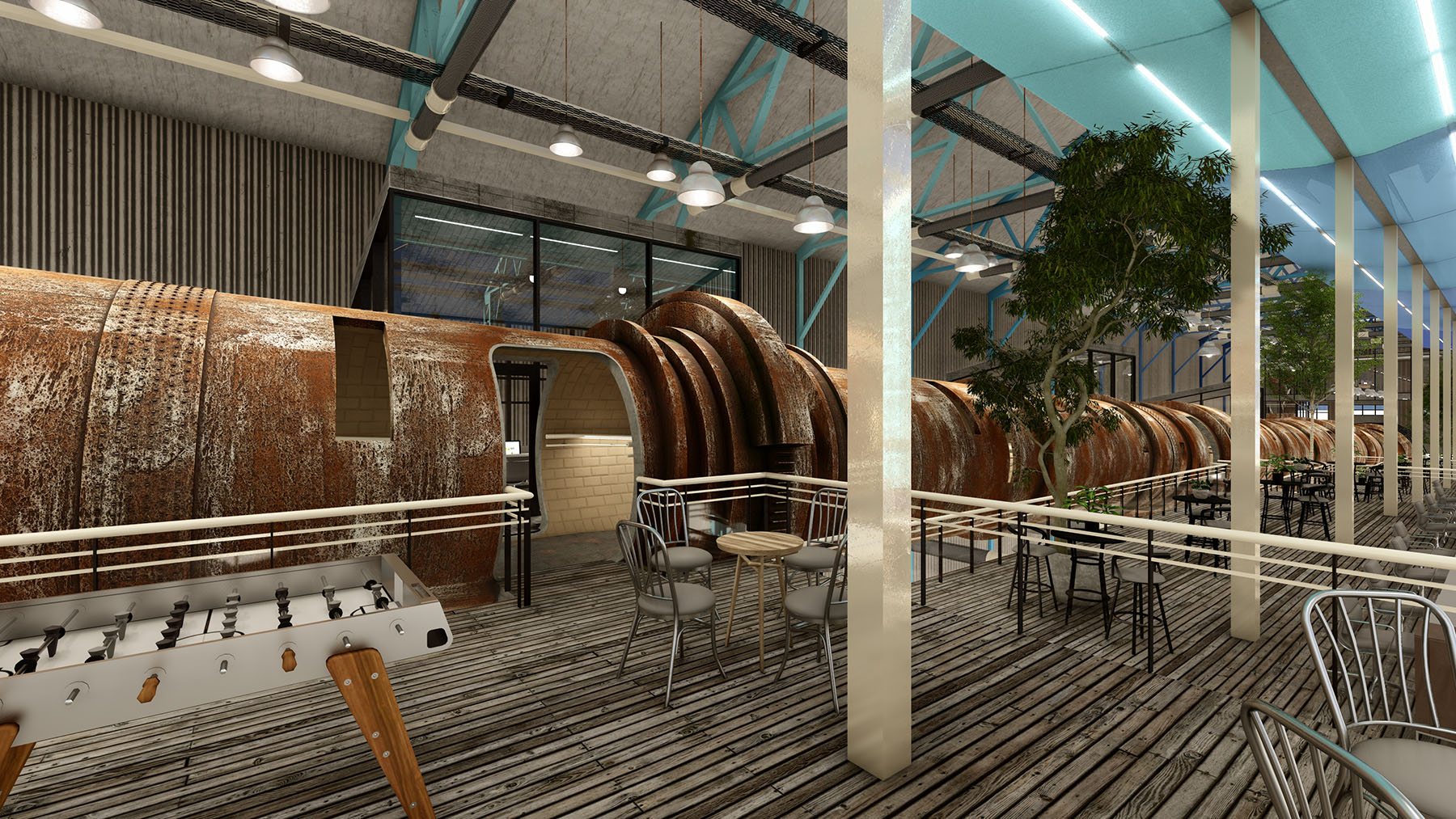
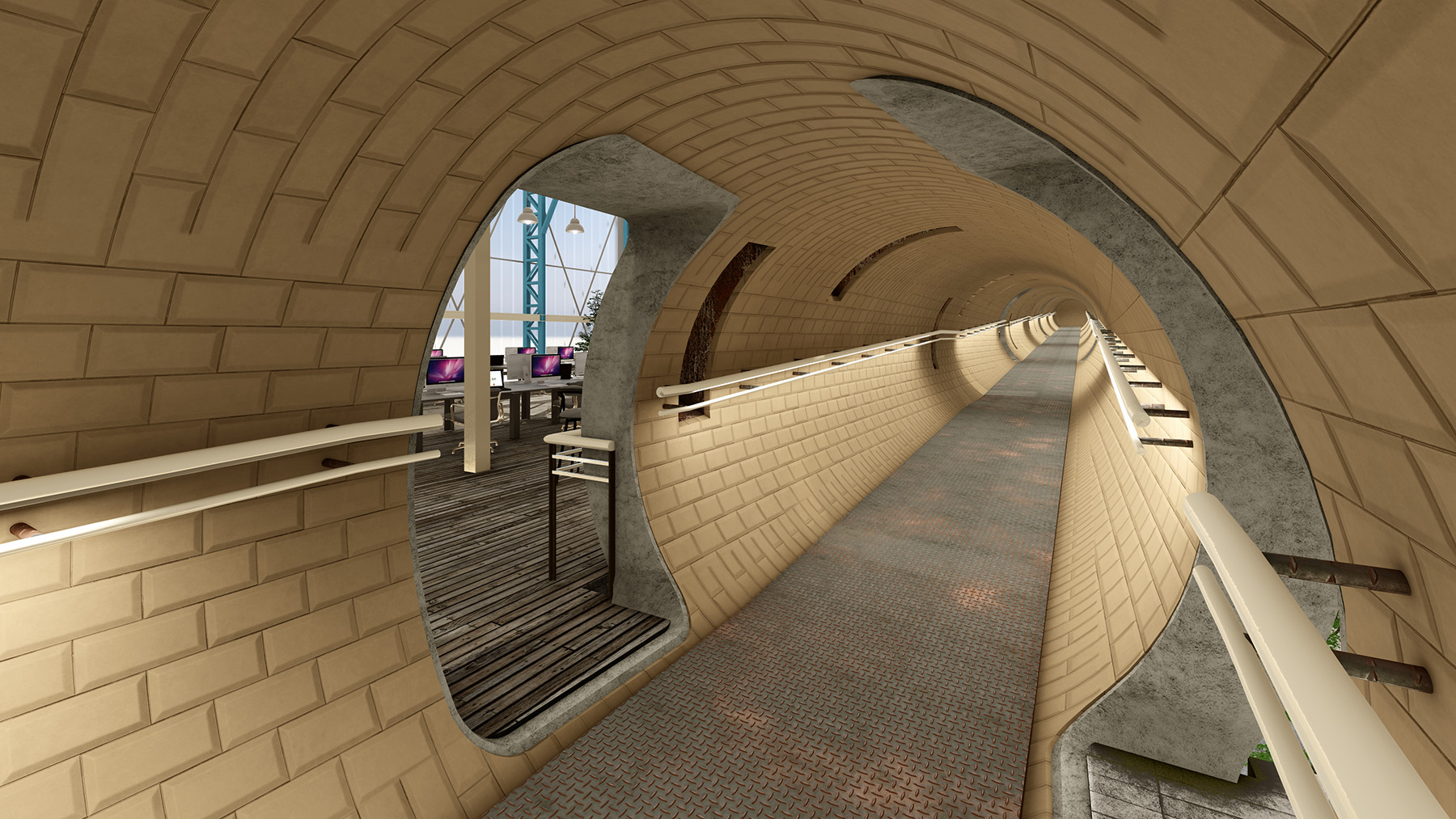
The Kiln House is a cement works that forms part of a 118-acre semi-rural site alongside a quarry. The cement works was completed in the early 1950’s and ceased operation in the early 1990’s, largely due to the environmental and anthropological health risks associated with the particulate matter pollution. Since the the cement works closure, the site has been used for different commercial uses including vehicle storage for recycling, aggregate and haulage, local occupiers lease storage compounds and business units.
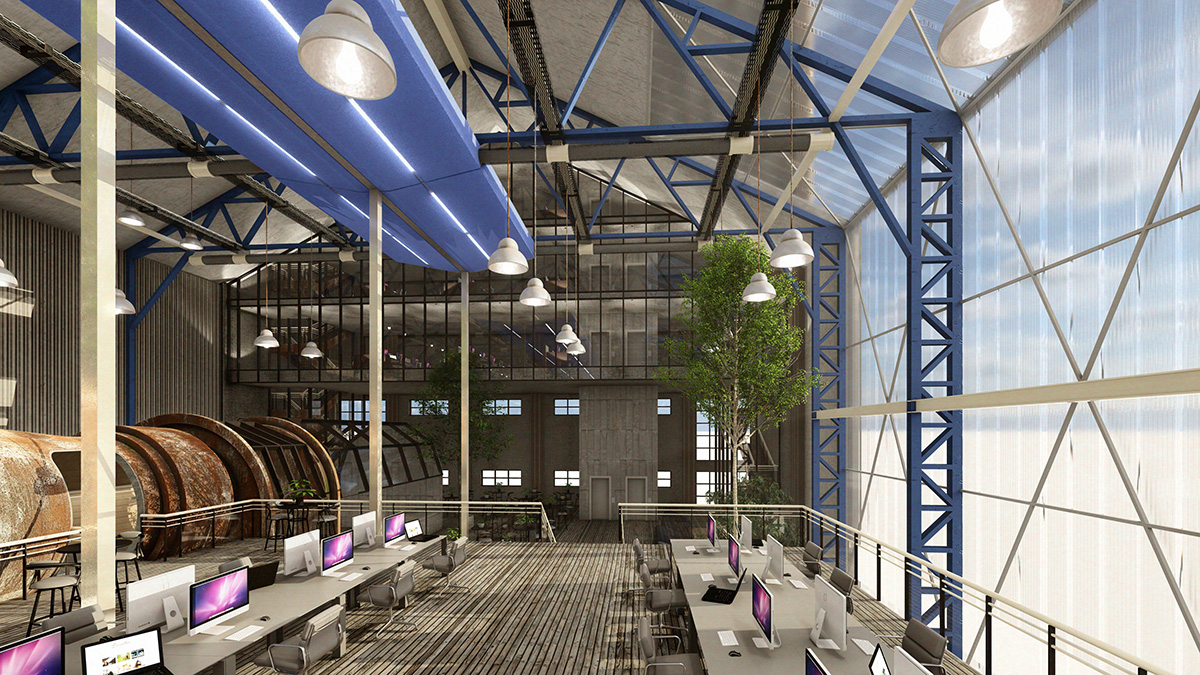
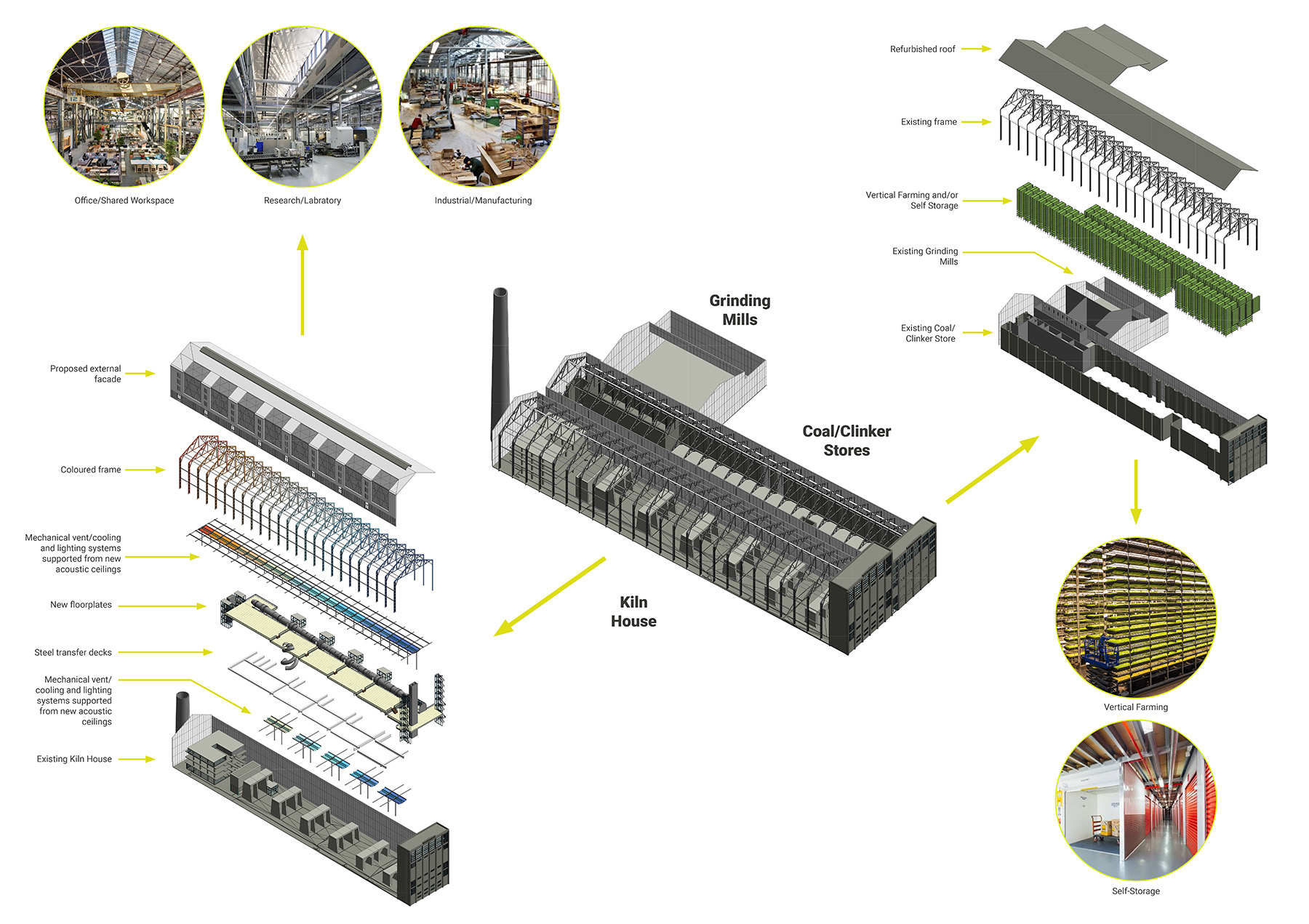
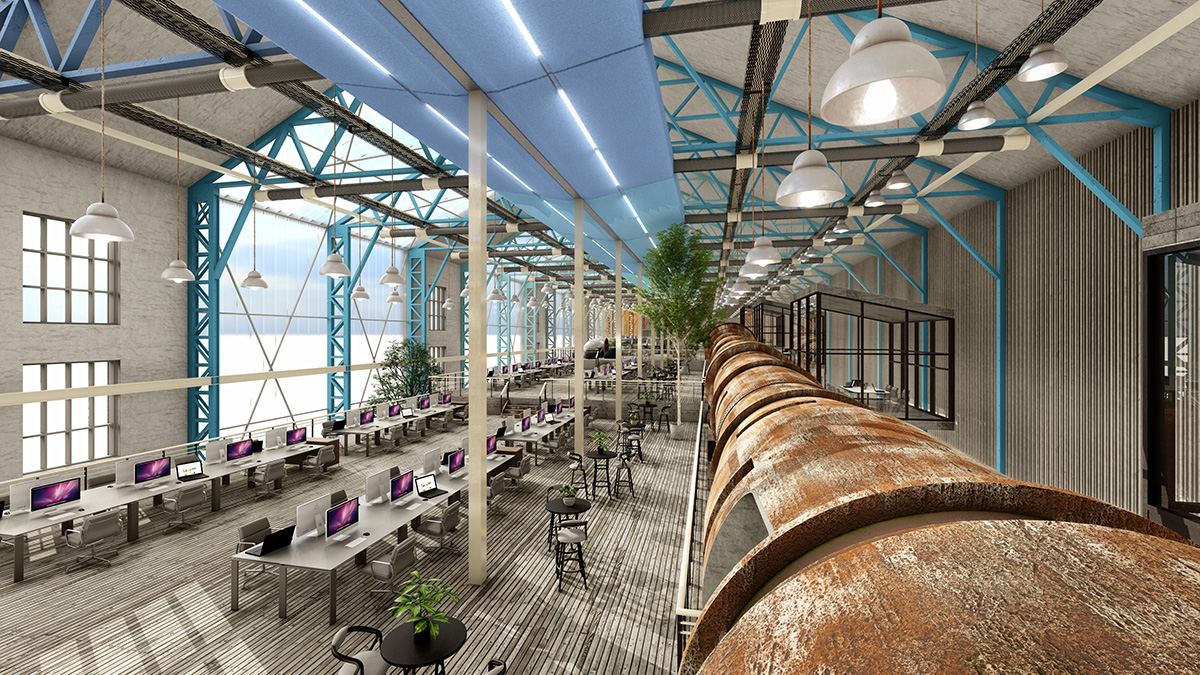
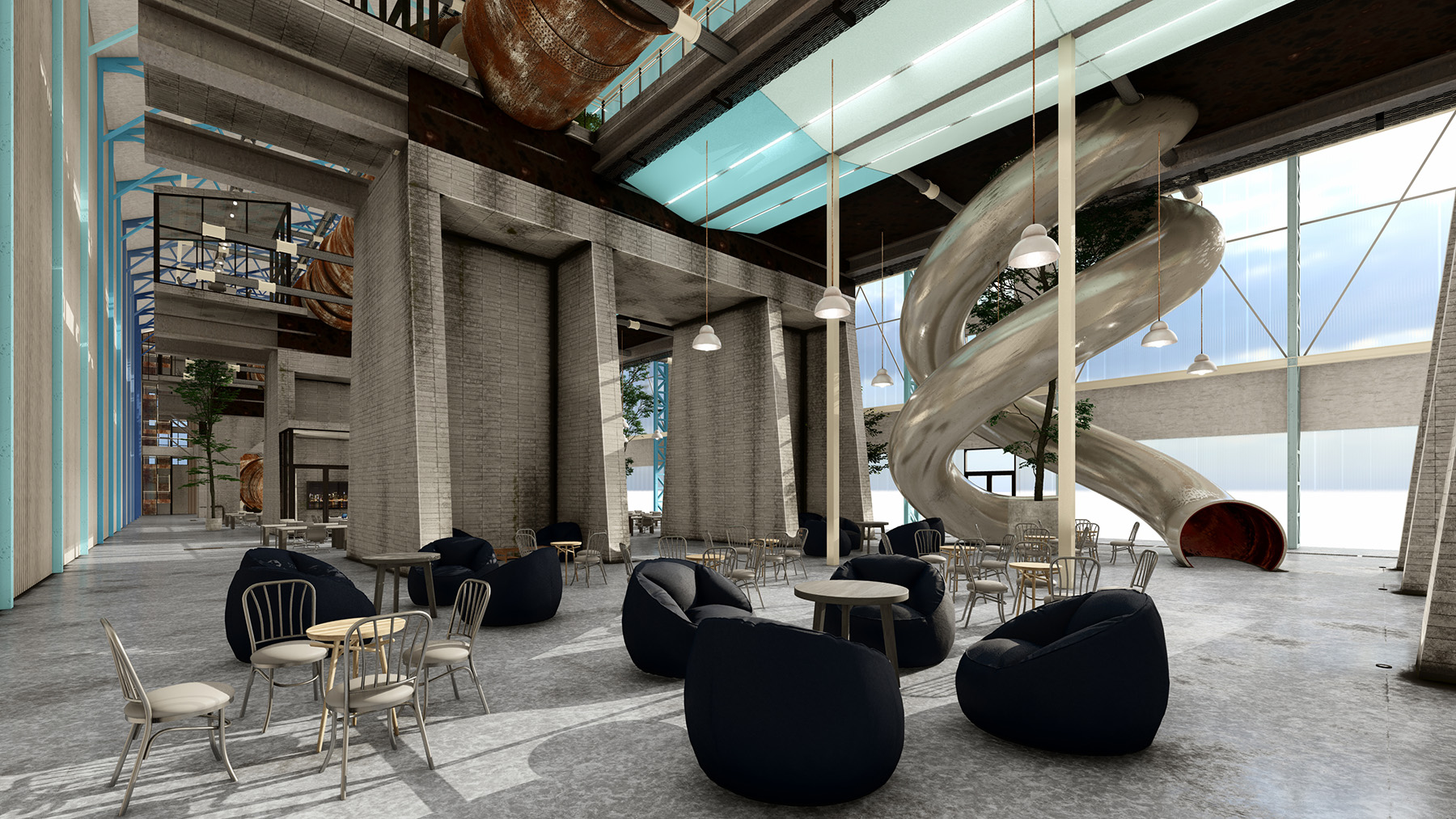
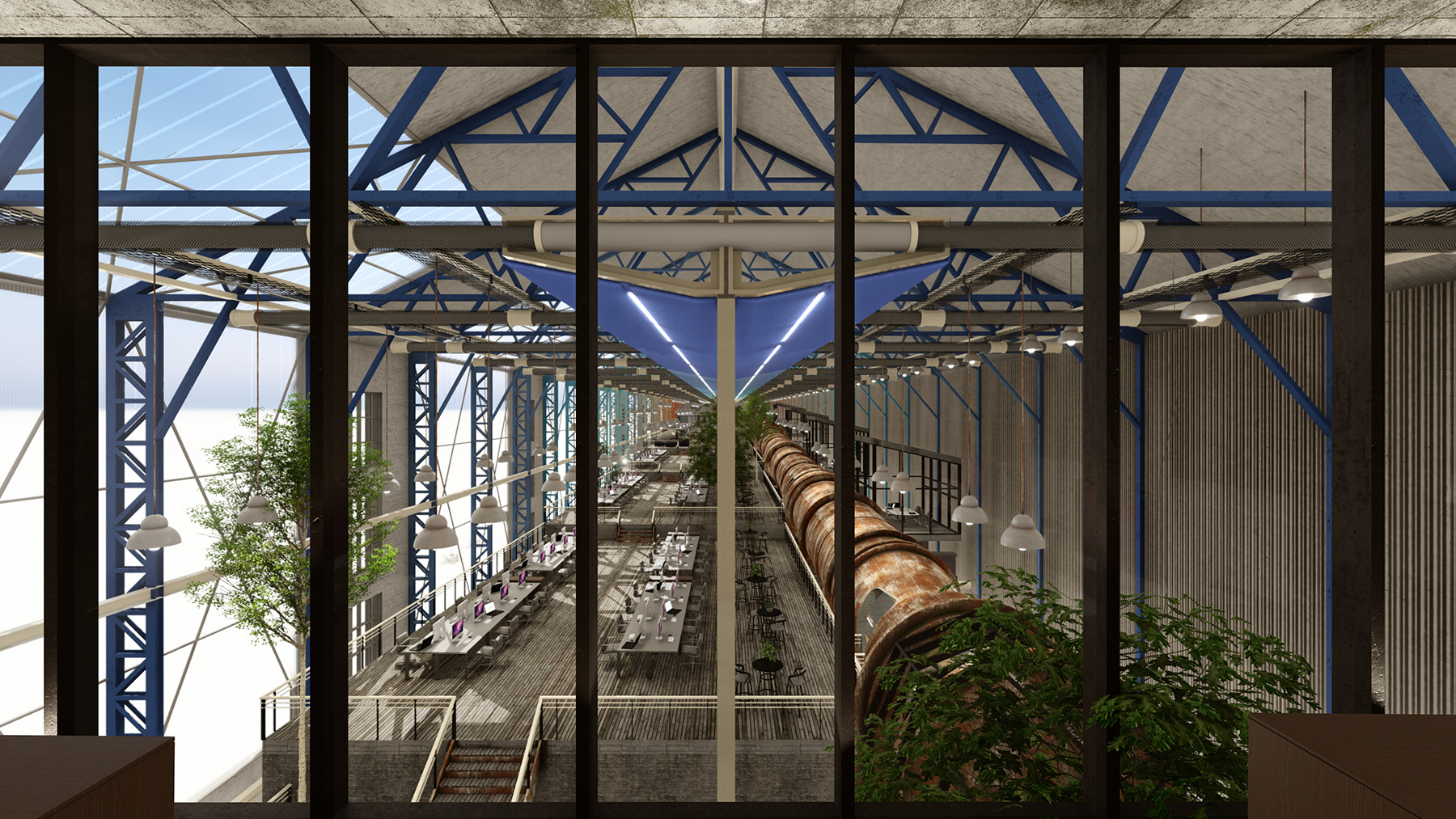
The extraordinary existing building comprises 3 elements, the Kiln House, the Coal/Clinker Store and the Grinding Mills. The Kiln House is largely clad in single sheet asbestos cladding and roofed in sheeting which is beyond life and which needs to be removed, providing an opportunity to repurpose with an active use reliant on daylight. For this, we are proposing office/shared workspace, but this approach to providing additional space could also be used for industrial, manufacturing, life sciences, tech start-ups etc. The proposed structural approach for this area of the building consists of using the existing internal structure to support all new floors, structure and MEP infrastructure. The existing steel portal frames bear no additional load and are used only to support new lightweight cladding and roofing systems. The immense and striking rotary kiln has been utilised as circulation space, connecting the new spaces with this long metal tube.
The Coal/Clinker Store and Grinding Mills are largely encased in concrete walls and therefore suited to dark uses. The existing extent of the concrete enclosure to these areas provides an interesting opportunity to repurpose these spaces for non-daylight reliant uses such as vertical farming or self storage as there is also significant height for multi-level self storage units or vertical farming trays within the existing space.